


Shoppable videos are no longer a “nice-to-have” experiment. In 2026, they sit at the intersection of content, commerce, and conversion—especially for creators, small businesses, and lean eCommerce teams that can’t afford wasted traffic.
This guide breaks down how shoppable videos actually drive conversions, what’s changed in 2026, and how you can build, test, and scale them without a massive budget or team.
Why Shoppable Videos Matter More in 2026 Than Ever
Shoppable videos didn’t suddenly become popular—they became necessary.
Paid Ads Are More Expensive and Less Effective
For freelancers, creators, and small brands, paid ads in 2026 feel increasingly hostile:
- CPMs are up across Meta, Google, and TikTok
- Attribution is less reliable
- Audiences scroll past polished ads instinctively
Traditional ads interrupt. Shoppable videos blend into how people already consume content. Instead of asking users to click, load, wait, and decide, shoppable videos let them buy inside the moment of interest.
But why are paid ads getting more expensive and less predictable? There are several reasons. Paid ads rely on algorithms you don’t control, and creatives often burn out quickly. On top of that, costs keep rising for the same results. Shoppable videos, especially when hosted on your own channels, offer a very different ROI profile. A single video can live on your website, be repurposed across social media, and continue driving conversions for months—long after the initial production effort.
Shoppable Videos Shorten the 2026 Buyer Journey
In 2026, buyers don’t want funnels—they want answers. Shoppable videos collapse the journey:
- See product in use
- Understand value instantly
- Click once to buy
No landing page gymnastics. No tab switching. This is why shoppable videos outperform traditional ads for impulse-friendly and consideration-light purchases.
What Makes a Shoppable Video Actually Convert
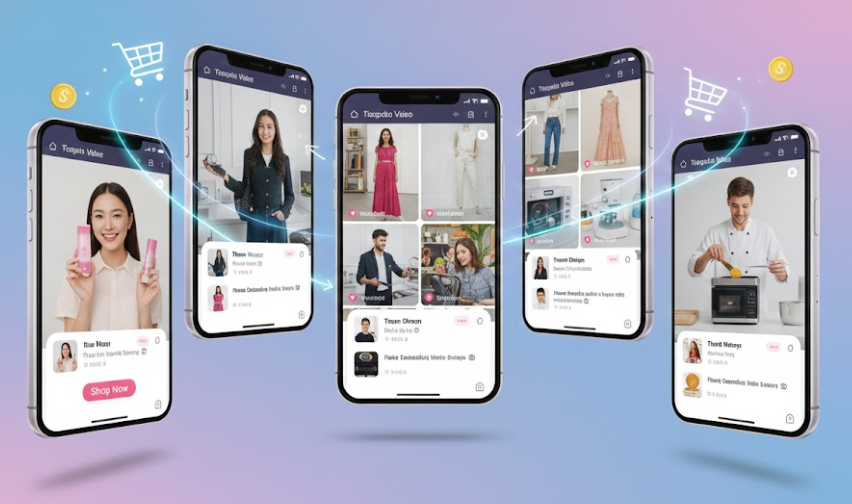
Not all shoppable videos work. Most fail quietly—no errors, no warnings, just low clicks and zero sales. The difference between a shoppable video that converts and one that doesn’t usually has nothing to do with production quality. It comes down to how the product is shown and when the buying moment appears.
Shoppable Videos vs Standard Product Videos
Standard product videos explain. Shoppable videos sell without feeling like selling. A standard product video might show:
- Clean studio lighting
- A rotating product shot
- A voiceover listing features
A converting shoppable video looks very different. For example, instead of saying “This portable blender has 6 blades and a 4000mAh battery”, a high-performing shoppable video shows someone:
- Tossing frozen fruit into the blender
- Blending it at their desk or in a car
- Taking the first sip within seconds
No specs. No narration. Just instant context. That’s the key difference: standard product videos are built to explain features, while shoppable videos are built around real usage, everyday context, and the feeling that the product can be used right now.
When viewers can clearly imagine themselves using the product in their own life, clicking becomes almost automatic.
The Key Elements Behind High-Converting Shoppable Videos
High-performing shoppable videos tend to share the same traits, regardless of industry.
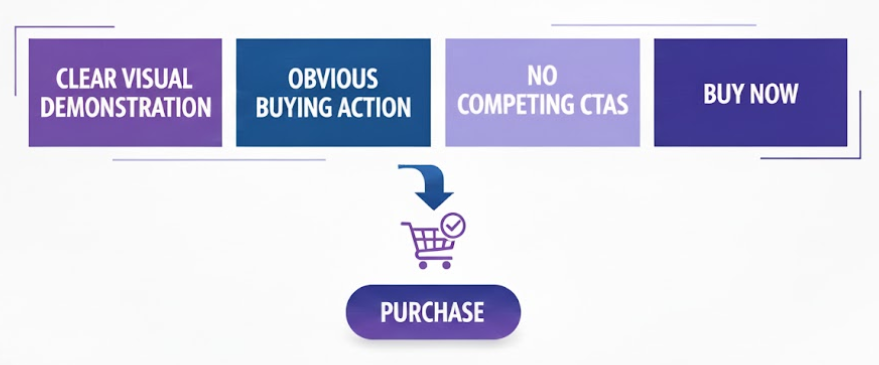
Clear visual demonstration
A fashion shoppable video that shows how a jacket fits while walking, sitting, and turning converts better than a static model pose. Movement answers questions faster than text ever could.
One obvious buying action
The best shoppable videos don’t ask viewers to “learn more,” “subscribe,” and “follow” at the same time. There’s usually one clear next step—view product, shop now, or see details.
No competing CTAs
When a shoppable video also pushes newsletter signups or app downloads, conversion drops. High-performing examples keep the focus on a single outcome.
Across categories—from home goods to digital products—the pattern is consistent: Overproduced videos tend to underperform. Believability converts better than beauty. If it feels like something a real customer would post, it’s far more likely to sell.
How to Create Shoppable Videos That Drive Conversions
This is where most teams overthink—and stall. Here are some tips:
Tip1 — Capture Attention in the First Few Seconds
Your first 3 seconds decide everything. Effective shoppable videos:
- Start mid-action
- Show the product solving a problem immediately
- Skip logos and intros
If nothing happens visually in the first seconds, viewers leave.
Tip2 — Show Real Product Use, Not Just Features
Features don’t sell. Context does. Instead of listing specs:
- Show the product in daily use
- Highlight friction it removes
- Let imperfection stay—it builds trust
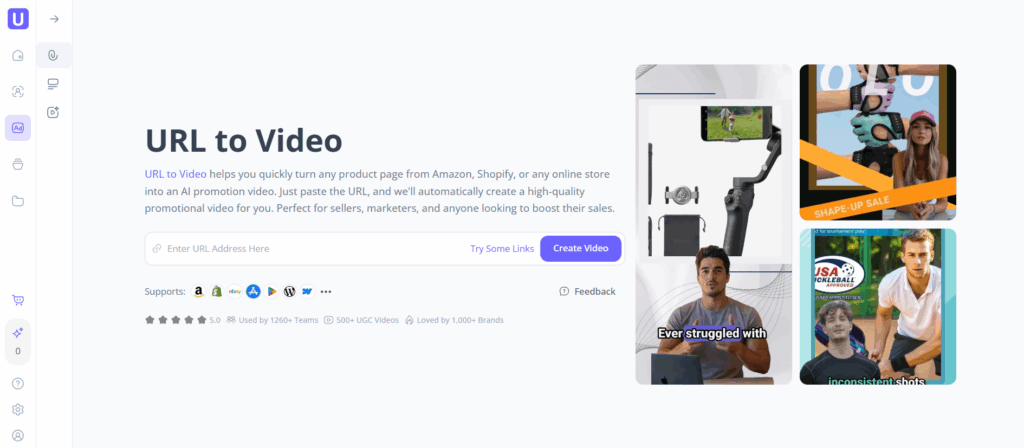
Tools like URL to Video help turn existing product pages or links into short-form shoppable videos without reshooting content.
Tip3 — Make the Buying Action Feel Natural
The buy button should feel like the next logical step—not a hard sell.
Best practices:
- Place CTAs near the moment of clarity
- Use subtle language (“Shop now”, “See details”)
- Avoid flashing or aggressive buttons
Shoppable videos work when buying feels optional—but obvious.
Shoppable Videos Best Practices for eCommerce Teams
Shoppable videos work best when they fit naturally into how users already browse and shop. In 2026, “best practices” aren’t theoretical—they’re shaped by how people actually behave on mobile screens.
Ideal Video Length, Format, and Placement
In 2026, performance data across eCommerce and social platforms shows clear patterns:
- 15–45 seconds performs best
- Vertical formats dominate
- Homepage, PDPs, and collection pages outperform blogs
Shorter videos reduce drop-off, but placement often matters more than length.
For example, many Shopify merchants report higher conversion lifts when shoppable videos appear directly on product detail pages, rather than buried in blog content or landing pages. Shopify itself highlights this behavior shift in its commerce content, noting that buyers prefer to see products in action at the moment of decision rather than earlier in the funnel.
On social platforms, vertical-first design is now non-negotiable. TikTok’s own commerce guidance emphasizes that videos designed for vertical, full-screen viewing retain attention longer and generate higher interaction—especially when product links are visible early.
In practice:
- A 20-second vertical video placed above the fold on a PDP often outperforms a 60-second horizontal video hidden below reviews.
- Collection pages with lightweight shoppable videos help undecided users compare products visually, speeding up purchase decisions.
Common Shoppable Video Mistakes That Hurt Conversions
Most shoppable video failures aren’t dramatic—they’re subtle.
Too many products in one video
A common mistake is trying to showcase an entire collection in a single shoppable video. For example, a fashion store might show five outfits in 30 seconds, each tagged with multiple products. The result? Cognitive overload and fewer clicks. High-converting shoppable videos usually focus on one product or one use case per video.
Overly scripted dialogue
Videos that sound like ads tend to be skipped. This is especially visible on platforms like TikTok, where creator-style content consistently outperforms scripted brand videos. TikTok’s creator marketplace insights repeatedly show that natural speech and unscripted demonstrations feel more trustworthy than polished voiceovers.
Hiding the CTA until the end
Waiting until the last second to reveal the shopping action is another conversion killer. Many viewers never reach the end. If users don’t immediately understand that they can click and buy, they won’t wait around to find out.
High-performing shoppable videos typically:
- Surface the product link early
- Reinforce it visually (icons, subtle prompts)
- Let the buying option stay visible throughout the video
If viewers don’t know they can buy, they won’t.
Choosing Shoppable Video Platforms That Scale in 2026
Not all shoppable video platforms are built for growth.
Must-Have Features for Shoppable Video Platforms
Look for platforms that offer:
- Native checkout or deep product links
- Analytics tied to conversions
- Easy reuse across channels
- Fast loading (especially on mobile)
Platforms that focus only on “video views” miss the point.
Website-First vs Social-First Shoppable Video Platforms
Social-first platforms (like TikTok) are great for discovery. Website-first platforms give you control and compounding value. Many teams start on social, then bring shoppable videos onsite using tools like UGC Maker to turn creator-style content into conversion assets.

How to Measure and Improve Shoppable Video Performance
Metrics That Actually Matter for Conversions
Forget vanity metrics. Focus on:
- Click-through rate
- Conversion rate
- Revenue per video
Views without clicks mean nothing.
Optimize Shoppable Videos Over Time
Optimization isn’t complex:
- Swap hooks
- Shorten intros
- Test CTA placement
Small changes compound fast.
Are Shoppable Videos the Right Move for Your Brand?
Brands That Benefit Most From Shoppable Videos
Shoppable videos work especially well for:
- Creators selling digital or physical products
- Small eCommerce teams
- Personal brands
- DTC startups
If your product needs to be seen to be understood, shoppable videos help.
When Shoppable Videos May Not Be the Best Option
They’re less effective if:
- The product requires long education
- Purchase cycles are extremely long
- Buyers need heavy customization
Even then, shoppable videos can still support early-stage discovery.
Start Small, Then Scale Shoppable Videos
The key to success with shoppable videos is to start small, learn fast, and scale only what truly converts.
- Pick one product, not your entire catalog Your first shoppable video isn’t a campaign—it’s a test. Choose a single product with clear value and demand, not something that needs a long explanation.
- Reuse content you already have A TikTok clip, UGC review, or product demo can become a shoppable video in minutes. You don’t need a new shoot to get started.
- Choose one shoppable video platform to test Don’t compare every tool on the market. Pick one shoppable video platform that integrates with your store and supports basic analytics—that’s enough for a first launch.
- Add one clear action, not five One product. One CTA. One path to purchase. Overloading your first shoppable video kills conversions faster than bad visuals.
- Ship it, even if it’s not perfect The goal is learning, not impressing. Your first shoppable video should go live before it feels “ready.”
Shoppable videos aren’t a gimmick—they’re a powerful way to turn attention into action. The secret? Start small, focus on one product, and make the buying process seamless. Learn from every click, drop-off, and conversion, then scale what works. By 2026, brands and creators who master this iterative, human-first approach will not just capture views—they’ll capture sales, repeat customers, and loyal fans. Your next step is simple: launch, measure, and optimize—then let your videos do the selling for you.
Frequently Asked Questions
Q. What are shoppable videos?
Shoppable videos are interactive videos where viewers can buy products directly while watching. They combine entertainment and e-commerce, letting your audience shop without leaving the video.
Q. How do shoppable video platforms work?
Platforms like UGC Maker or URL to Video allow you to add clickable product links, embed videos on your website, and track performance. They streamline shopping, making conversions faster and easier.
Q. What makes TikTok shoppable videos so effective?
TikTok shoppable videos leverage short-form, mobile-first content with direct product links. Viewers can swipe, tap, and buy instantly—perfect for Gen Z and Millennial audiences.
Q. Can I monetize TikTok shoppable videos as a small creator or brand?
Absolutely! You can earn through TikTok Shop, affiliate links, and sponsored content. Many small brands and creators turn their existing TikToks into shoppable videos for extra revenue.
Q. How do I post my first shoppable video?
Start by connecting your product catalog to a shoppable video platform, select one video, tag the product(s), and add a clear CTA. Even a single clip can test your audience’s response before scaling.
Q. What are the best practices for shoppable videos?
Keep videos short (15–45 seconds), use vertical format, focus on one product per video, and place CTAs clearly. Reuse existing content like product demos or UGC for faster results.
Q. How do I track if shoppable videos are working?
Monitor click-through rates, video drop-offs, and conversion rates. Test different hooks, placements, and formats. Even small improvements indicate your strategy is working.
Q. Can shoppable videos work for small businesses or solo creators?
Yes! Shoppable videos are perfect for small teams or creators because you can start with one product, reuse content, and scale gradually. It’s low-risk, high-reward.
Q. Where can I learn more about embedding shoppable videos on my site?
You can explore tools like UGC Maker to create and manage shoppable videos. These platforms let you embed interactive videos directly on your website, add clickable product links, and optimize for conversions—making it easy to integrate video commerce without complex setup.