


User-generated content (UGC) is no longer a "nice to have" in ecommerce. It is the single most powerful conversion lever available to brands today, and the data backs it up.
In 2026, product pages featuring UGC generate up to 161% higher conversion rates than those without it. Social posts containing UGC drive 10x higher conversion rates than standard brand content. And 40% of shoppers now refuse to purchase a product if there is no UGC on the page.
The shift is fundamental: your customers trust other customers far more than they trust you.
But knowing that UGC matters and knowing what great UGC actually looks like are two different things. This guide cuts through the theory. Below, you will find 15 real-world ecommerce UGC examples, across video, reviews, social, product pages, and AI-generated formats, with a breakdown of exactly why each one works and how to replicate it for your own brand.
What Is UGC in Ecommerce?
User-generated content is any content created by real people, customers, creators, or fans, rather than by the brand itself. In ecommerce, it includes product reviews and ratings, customer photos and videos, unboxing clips, social media posts, testimonials, Q&As, and before-and-after transformations.
There are two main types worth distinguishing:
Organic UGC is created spontaneously by customers who love your product and share it without any prompting. It is the most authentic form, but the hardest to scale.
Creator UGC is commissioned by brands, you pay a UGC creator to produce content in the style of an organic customer video. It looks and feels authentic, but you control the brief, the hook, and the messaging. This is what most growing ecommerce brands use to scale their content output.
In 2026, a third category has emerged: AI UGC, content generated using AI tools that replicates the look and feel of real customer videos at scale, without requiring a human creator for every asset. More on this in examples 13 through 15.
Why UGC Works for Ecommerce in 2026
Before diving into the examples, three things explain why UGC consistently outperforms polished brand content.
Trust. 92% of consumers trust UGC more than traditional advertising. When a real person says your product solved their problem, it carries a credibility that no brand copywriter can manufacture. It is the digital equivalent of a recommendation from a trusted friend.
Conversion. The numbers are striking: UGC on product pages increases conversion rates by 25–40% on average, with video reviews specifically driving a 40–60% lift. In Q1 2026, UGC drove 6.73x higher conversions compared to standard content. For lower-priced items, even a handful of reviews can lift conversion by 45%.
Cost efficiency. Traditional video production is expensive. Creator UGC typically costs between $150 and $350 per video. Brands using UGC report saving 30–80% compared to traditional content production, while achieving superior performance metrics. For paid ads, UGC delivers a 4x higher click-through rate at 50% lower cost per click.
15 Best Ecommerce UGC Examples
Group 1: UGC Video Examples
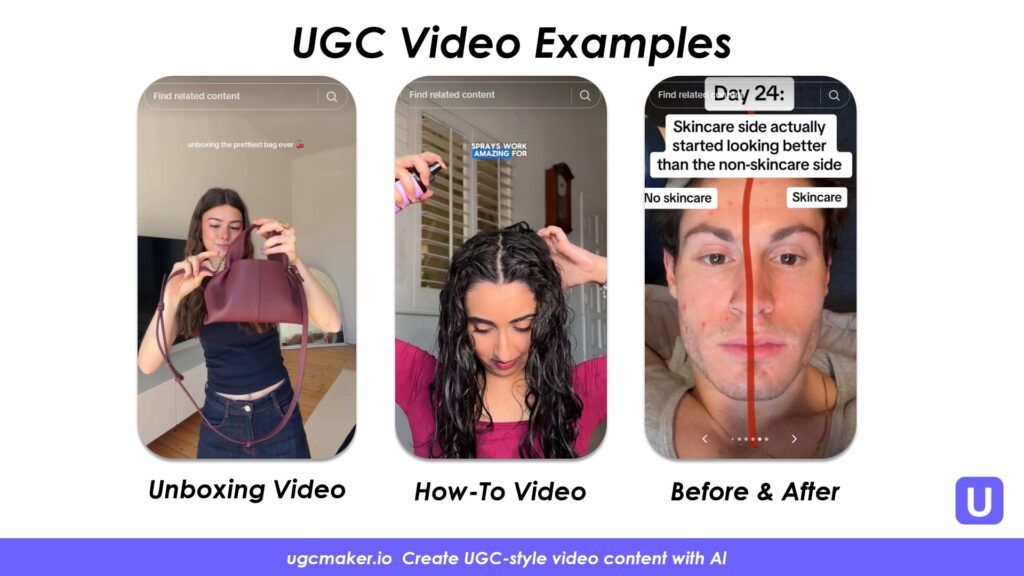
1. Unboxing Video — Polène
What it is: Polène, the French leather goods brand, built much of its early online presence through creator unboxing videos on YouTube and TikTok. Creators film the moment of opening the package, the tissue paper, the dust bag, the reveal of the bag itself, capturing a first-impression experience that potential buyers immediately connect with.
Why it works: Unboxing videos tap into two powerful psychological triggers: curiosity and vicarious experience. Viewers imagine themselves in the creator's position. Polène's packaging is deliberately beautiful, making the unboxing itself a form of brand storytelling. One Polène unboxing video by a mid-sized creator regularly pulls 500,000+ views with minimal paid promotion.
For ecommerce brands selling any physical product with tactile appeal, beauty, fashion, home goods, consumer electronics, unboxing content is one of the highest-performing UGC formats available. It answers the question every online shopper has: What is it actually like to receive this?
2. Tutorial / How-To Video — Prose
What it is: Prose, the custom haircare brand, relies heavily on UGC tutorial content across TikTok and Instagram. Real customers film step-by-step routines showing how they use Prose products in their wash day, demonstrating application techniques, textures, and results on their actual hair.
Why it works: Tutorial UGC removes purchase hesitation by answering the core question: Will this work for someone like me? Seeing a person with a similar hair type demonstrate a product in real time is far more convincing than any before-and-after graphic. Prose's tutorial content also consistently surfaces in TikTok search, giving it ongoing organic visibility beyond its initial post life.
For any product with a learning curve or technique element, skincare, fitness equipment, kitchen tools, supplements, tutorial UGC is the format that converts browsers into buyers.
3. Before & After Video — Skincare and Beauty Brands
What it is: Before-and-after UGC is the dominant format in beauty, skincare, and health ecommerce. A creator films their skin, hair, or body before starting a product, documents the journey over weeks, and shares the transformation. Brands like The Ordinary, CeraVe, and Topicals have all generated massive organic reach through this format, often without initiating the content themselves.
Why it works: Before-and-after content delivers the single most powerful piece of evidence any product can offer: proof of result. It answers the fundamental purchase question, Does this actually work?, more convincingly than any claim in an ad. According to research, 85% of consumers say visual UGC is more influential than professional branded content when making a purchase decision.
The format also thrives on TikTok's algorithm, which rewards high-completion videos. A genuine skin transformation documented over 30 days gives viewers a reason to watch until the end.
Group 2: Review & Testimonial UGC Examples
4. Written Product Review Used as Ad Creative — Aerie
What it is: Aerie, the American Eagle lingerie and activewear brand, pioneered a model of turning raw customer reviews into primary advertising assets. Their #AerieREAL campaign, built on a commitment to never retouch model photos, created a flood of authentic customer reviews and real-body images that the brand then amplified across paid and owned channels.
Why it works: When a customer writes "I finally found jeans that fit my body and make me feel confident," that sentence carries more persuasive weight in an ad than any headline a copywriter could produce. Research from Bazaarvoice shows that shoppers who interact with UGC reviews convert 144% more often than those who do not.
Aerie's strategy turned their customers into their marketing department, and the result was sustained double-digit revenue growth driven by the authenticity of the community, not ad spend.
5. Video Testimonial — Bluehouse Salmon
What it is: Bluehouse Salmon, a land-based salmon aquaculture brand, runs a UGC strategy built around short video testimonials from real customers, chefs, home cooks, and food enthusiasts, speaking directly to camera about the quality and taste of the product.
Why it works: Video testimonials combine the authenticity of UGC with the persuasive power of a direct recommendation. Unlike a text review, a video testimonial shows the person's face, tone of voice, and genuine enthusiasm, elements that are almost impossible to fake and immediately recognizable as real. For premium-priced products that require trust-building before purchase, video testimonials are one of the highest-converting formats in the full funnel.
The format also works powerfully as a Meta ad unit. UGC-style video ads receive 4x the click-through rate of polished brand ads at half the cost per click.
6. Q&A UGC — ClearScore
What it is: ClearScore, the fintech app, uses Q&A-style UGC where creators pose as curious users asking common questions about credit scores and financial products, then answer them from personal experience. The format mirrors the way real people search for information and positions the product as the natural solution.
Why it works: Q&A UGC meets potential customers at exactly the moment of decision-making doubt. It pre-empts the objections that stop people from purchasing and delivers answers in a relatable, non-salesy format. For ecommerce brands, Q&A UGC placed on product pages, in a community questions section or as a pinned video, can reduce support tickets while increasing conversion.
Group 3: Social Media UGC Examples

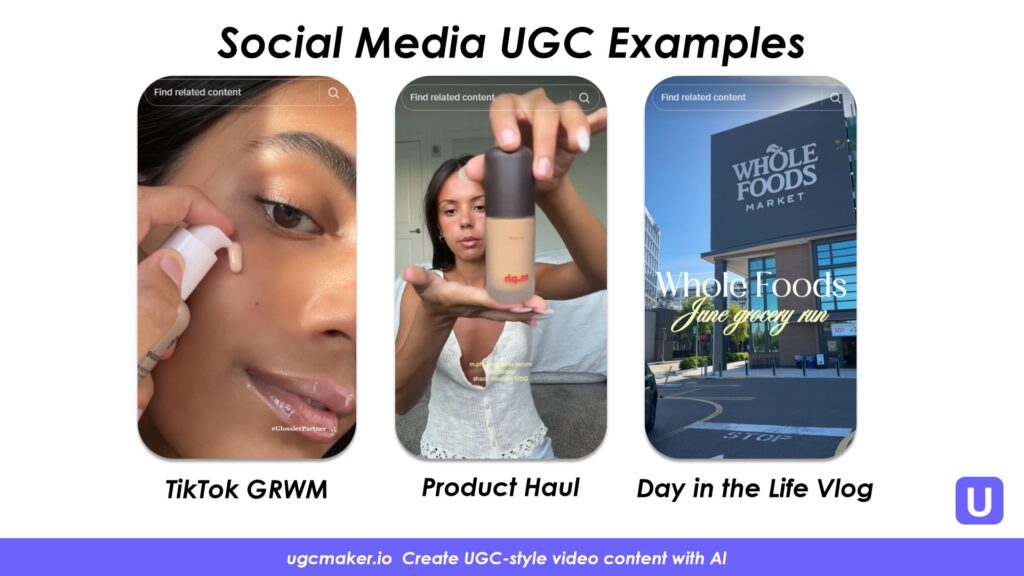
7. TikTok GRWM (Get Ready With Me) — Glossier
What it is: Glossier built a $1.8 billion beauty brand almost entirely on UGC, and the Get Ready With Me format has been central to its social strategy since TikTok's rise. Creators film their morning skincare and makeup routine, naturally incorporating Glossier products into their daily ritual without ever feeling like a sponsored post.
Why it works: GRWM content works because it is inherently watchable and intimate. Viewers follow along with a person's real morning, which makes any product featured feel like a genuine recommendation rather than an advertisement. Glossier's UGC-driven model accounts for approximately 70% of its online sales, with customers acting as organic micro-influencers across platforms.
The key to Glossier's success is that they made sharing easy and rewarding: they repost customer content, feature it on their website, and create a flywheel where being featured feels aspirational enough to motivate the next wave of creators.
8. Instagram Reels Product Haul — Sephora
What it is: Sephora's UGC ecosystem is built around haul content: creators film the products they purchased in a single Sephora shopping trip, show each item, and give quick verdicts on what they love. Sephora's own channels regularly reshare the best of this content, and its affiliate program incentivizes creators to tag products directly.
Why it works: Haul content drives multiple conversions from a single video. A viewer watching a creator unpack eight Sephora products is exposed to eight potential purchase decisions at once. The casual format, creator sitting on their bed, bags around them, signals authenticity, and the variety keeps viewers watching to the end.
Sephora's integration of shoppable links means that the gap between inspiration and purchase has been reduced to a single tap. This combination of authentic UGC and frictionless commerce is the standard ecommerce brands should aspire to.
9. "Day in the Life" Vlog — Whole Foods
What it is: Whole Foods has generated massive organic UGC through "day in my life" content where creators document their daily routines, morning walks, cooking sessions, grocery runs, with Whole Foods products appearing naturally throughout. The brand does not script these appearances; they emerge organically from creators who genuinely shop there.
Why it works: Day-in-the-life content is the least sales-forward UGC format, which makes it the most persuasive. When a product appears in someone's real daily routine, it signals that the product has passed the ultimate test: repeat purchase and genuine integration into a lifestyle. For ecommerce brands, this format drives brand consideration rather than immediate conversion, but it is the content that builds long-term customer trust.
Group 4: Ecommerce Product Page UGC Examples
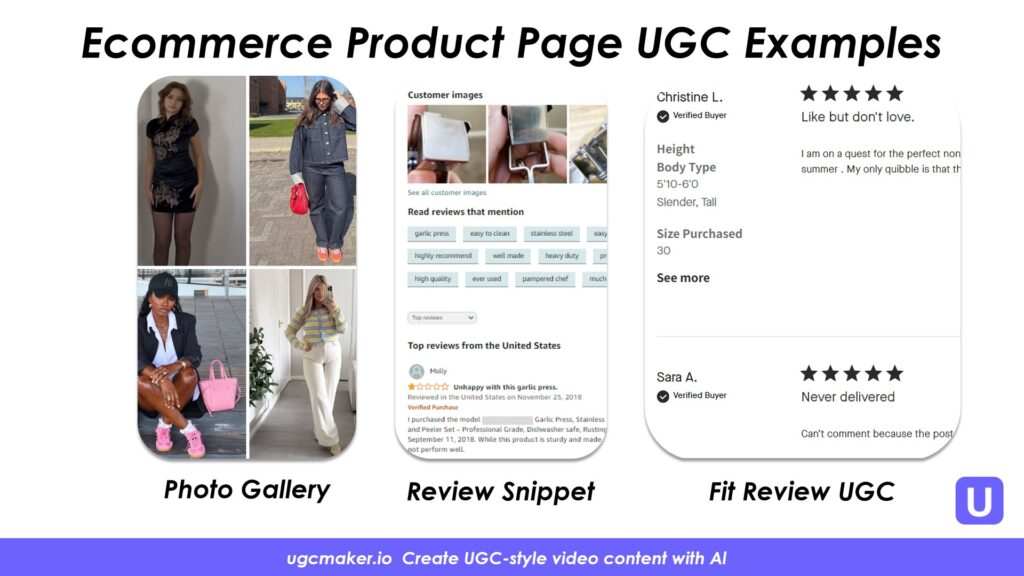
10. Customer Photo Gallery — ASOS
What it is: ASOS, one of the world's largest fashion ecommerce platforms, built its customer photo gallery, called "As Seen On Me", into a core feature of the product page experience. Shoppers can upload photos of themselves wearing purchased items, filtered by size and body type, allowing potential buyers to see exactly how a garment looks on someone with their measurements.
Why it works: The biggest source of friction in fashion ecommerce is fit uncertainty. A studio shot on a size-4 model tells a size-14 shopper almost nothing about how the item will look on their body. Customer photos solve this problem directly. Product pages with customer photos convert 30–45% better than those with professional photos alone.
ASOS's gallery also functions as a community platform: being featured creates a sense of participation that drives repeat uploads, giving the brand a self-sustaining content flywheel.
11. Star Rating + Review Snippet in Paid Ads — Amazon Sellers
What it is: Amazon sellers, particularly in the home goods and beauty categories, regularly extract their best review snippets, a five-star rating paired with a specific, vivid customer quote, and use them as the creative foundation for Meta and Google display ads.
A typical execution looks like this: a clean product image on the left, a prominent "★★★★★" rating badge, and a two-sentence customer quote that speaks to a specific problem solved. No brand copy. No headline. Just the customer's words.
Why it works: This format works because it removes the brand from the equation. The ad looks like social proof rather than advertising. Ads built around genuine customer language consistently outperform traditional brand messaging, especially for products where trust is the primary barrier to purchase.
12. Size/Fit Review UGC, Everlane
What it is: Everlane, the direct-to-consumer clothing brand, built a review system that specifically captures size and fit data from customers: their exact measurements, what size they purchased, how the fit compared to their expectations, and whether they recommend sizing up or down. This data is surfaced prominently on every product page.
Why it works: Size uncertainty is the number one reason for abandoned carts and high return rates in fashion ecommerce. When a potential buyer sees that 47 people with a 28-inch waist bought a size 6 and found the fit true-to-size, the purchase decision becomes dramatically easier. Everlane's approach reduces return rates while increasing conversion, both key metrics for ecommerce profitability.
Group 5: Platform-Specific UGC Examples
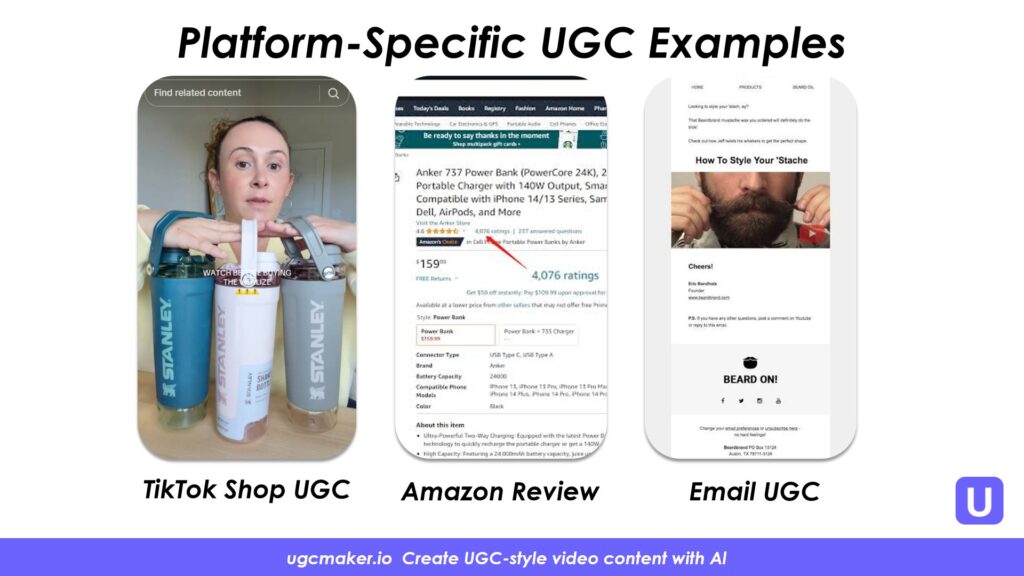
The channel where your UGC lives matters as much as the content itself. The same customer video performs differently on TikTok Shop, Amazon, and your own product page. In 2026, the smartest ecommerce brands don't just create UGC,they deploy it strategically across the platforms where it converts best.
13. TikTok Shop UGC — Stanley
What it is: Stanley, the drinkware brand that exploded from a niche outdoor product into a cultural phenomenon, built its 2023–2024 comeback almost entirely on TikTok UGC. Creators posted Stanley tumbler content organically,"car cup holder" fits, color collection hauls, durability tests,and Stanley amplified the best content through TikTok Shop, turning views directly into purchases without the user ever leaving the app.
Why it works: TikTok Shop collapses the funnel. A viewer watches a 30-second UGC video, sees the product tagged in the corner, taps once, and checks out,all within TikTok. The purchase happens while the emotional response to the content is still active, before the viewer has time to second-guess. For ecommerce brands, this combination of authentic UGC and zero-friction purchase is the highest-converting format available on any social platform in 2026.
14. Amazon Review UGC,Anker
What it is: Anker, the consumer electronics brand, turned Amazon's review ecosystem into its primary marketing engine. Rather than relying on paid advertising, Anker invested in post-purchase review collection,following up with every buyer, making the review process frictionless, and responding publicly to every piece of feedback. The result is a product catalog where most items carry thousands of detailed, photo-rich reviews that dominate Amazon search rankings.
Why it works: On Amazon, reviews are both a conversion tool and a ranking algorithm input. Product pages featuring UGC generate 161% higher conversion rates, and user reviews can drive 270% higher conversions for lower-priced items. For Anker, the compounding effect of review volume over time created a moat that new entrants cannot easily cross regardless of their ad spend.
15. Email UGC — Beardbrand
What it is: Beardbrand, the men's grooming DTC brand, built a UGC strategy centered on email rather than social media. They collect customer transformation photos,before-and-after beard growth journeys documented over months,and feature the best submissions as the lead content in their weekly email newsletters. The emails read less like marketing and more like a community magazine, with real customer stories driving the narrative.
Why it works: Email is the one channel a brand fully owns,no algorithm changes, no platform fees, no reach throttling. 50% of marketers make use of UGC in email campaigns, but most use it as a secondary element. Beardbrand made it the primary content, which transformed their email program from a promotional channel into a community touchpoint that customers actively look forward to receiving.
How to Build Your Ecommerce UGC Strategy in 2026
Understanding individual UGC examples is useful. Building a systematic strategy is what separates brands that use UGC occasionally from brands that use it as their primary growth engine.
Step 1: Define your goal. Are you trying to increase product page conversion? Lower your cost per acquisition on Meta? Build long-term brand trust? The format and placement of your UGC should follow the goal. For conversion, prioritize product page photo galleries and video reviews. For paid acquisition, prioritize short-form UGC video ads.
Step 2: Choose the right format for each channel. Short-form video (15–45 seconds) dominates TikTok, Reels, and YouTube Shorts. Written reviews with photos perform best on product pages and Google Shopping. Long-form testimonials build trust in email sequences and landing pages.
Step 3: Source UGC at scale. You have three levers: (1) Incentivize real customers with loyalty points, discounts, or features on your brand page. (2) Commission UGC creators, rates typically run $150–$350 per video. (3) Use AI UGC tools like ugcmaker.io to generate content at scale for testing and paid acquisition.
Step 4: Deploy across every touchpoint. Most brands use UGC on social media but neglect their own product pages, email flows, and ad creative. The highest-converting deployment is a product page with a customer photo gallery, a pinned video testimonial, and a prominent review section, all working together to answer every buyer objection before it arises.
Step 5: Test, measure, and iterate. Track three metrics: click-through rate on UGC ads, conversion rate on pages featuring UGC, and return rate on products with video reviews. Refresh your creator pool monthly to avoid audience fatigue, and run hook tests continuously to stay ahead of creative decay.
Common UGC Mistakes to Avoid
Collecting content but never deploying it. The most common UGC failure is accumulating reviews and customer photos but never using them as ad creative or featuring them prominently on product pages. Great UGC sitting in a folder does nothing for your conversion rate.
Making UGC too polished. If your "customer video" looks like it was shot in a professional studio, it defeats the purpose. The authenticity signal, natural lighting, direct-to-camera delivery, slightly imperfect framing, is exactly what makes UGC credible. Over-producing UGC strips it of the quality that makes it perform.
Ignoring usage rights. Using a customer's content without explicit permission is a legal and reputational risk. Build a clear rights management process into your UGC collection flow: a simple opt-in at the review submission stage is sufficient for most use cases.
Conclusion
In 2026, the ecommerce brands growing fastest are not the ones with the biggest production budgets. They are the ones who have built systems for capturing, creating, and deploying authentic customer content across every touchpoint in the buyer journey.
The 15 examples above represent the full spectrum of what great ecommerce UGC looks like, from Glossier's community-driven GRWM ecosystem to Everlane's structured fit review data, from GoPro's award-driven content flywheel to AI-generated hook testing at scale.
The common thread across every example is this: real people, real results, real language. Whether that content comes from a genuine customer, a commissioned creator, or an AI tool built to replicate authentic style, the format wins because it closes the trust gap that traditional advertising cannot.
Ready to create your own high-converting UGC content? Try UGC Maker, generate UGC-style video scripts and ad-ready content for your ecommerce brand in minutes, no creator or camera required.
FAQ
What is an example of UGC content in ecommerce?
UGC in ecommerce includes customer product reviews, buyer photos on product pages, unboxing videos on TikTok, before-and-after testimonials, GRWM content featuring your products, and customer-submitted size and fit data. Any content created by a real person rather than your brand's marketing team qualifies as UGC.
How do I get UGC for my ecommerce store?
The most reliable methods are: (1) adding a photo and video upload option to your post-purchase review flow, (2) commissioning UGC creators through platforms like Billo or Minisocial, and (3) using AI UGC tools like UGC Maker to generate creator-style content at scale for paid channels.Want to streamline your workflow? Check out our full breakdown of the 2026 Best 10 UGC Tools to Scale Your Video Ads.
Is AI-generated UGC content effective for ecommerce?
Yes. AI UGC performs strongly in paid acquisition contexts, particularly for hook testing and scaling proven creatives. Brands using AI UGC platforms report click-through rate increases of up to 130% and content cost reductions of up to 96%. It works best as part of a hybrid strategy that combines AI-generated content for testing with real creator content for brand-building.
What types of UGC drive the most sales in ecommerce?
In 2026, video reviews and testimonials drive the highest conversion lift (40–60% on product pages). Customer photo galleries rank second (30–45% lift). Written reviews remain essential for SEO and trust-building, particularly when they include specific, detailed feedback about fit, quality, and use experience.
Which platforms are best for ecommerce UGC?
Instagram leads for engagement among ecommerce marketers (28%), followed by Facebook (23%), TikTok (19%), and YouTube (17%). TikTok drives the strongest results for younger audiences and product discovery, while Instagram and Facebook deliver the most reliable return on paid UGC ad spend.