


Every four years, the World Cup turns into the biggest advertising battlefield on the planet. Billions of fans, weeks of constant attention, and a handful of brands willing to spend tens of millions of dollars to own a single moment in the cultural conversation. Official FIFA sponsorship packages alone can run into nine figures, and that's before a single dollar of media spend or production cost.
For most brands, that price tag isn't realistic. But the good news is that the budget was never really the secret ingredient. The campaigns that actually work, the ones people screenshot, quote, and send to their group chats, succeed because of a handful of creative principles that have nothing to do with sponsorship rights. This guide breaks down what those principles are, walks through the campaigns that nailed them in 2026, and then shows you exactly how to apply the same playbook to your own product using AI, without a Nike-sized production budget.
What Makes a Great World Cup Ad? (5 Things They All Share)
Before looking at specific campaigns, it helps to know what you're actually looking for. Strip away the celebrity cameos and the cinematic budgets, and almost every memorable World Cup ad is built on the same five pillars.
1. Emotion Over Product
The weakest football ads spend their runtime explaining what a product does. The strongest ones barely mention the product at all. They tap into something the viewer already feels, nostalgia, pride, anxiety before a big match, the joy of watching with friends, and let the brand attach itself to that feeling rather than compete with it.
2. Storytelling That Feels Like a Short Film
The campaigns that get talked about months later are rarely 15-second product shots. They have a beginning, a turn, and a payoff, even when the whole thing runs under two minutes. Viewers can tell within the first five seconds whether they're watching an ad or watching content, and that distinction decides whether they keep watching.
3. Star Power (Real or Reimagined)
Football talent brings instant credibility and built-in attention, especially during a tournament when fans are already primed to see their favorite players on screen. But "star power" doesn't strictly require a contract with Mbappé, a confident, human-feeling presenter or avatar can borrow the same emotional shorthand at a fraction of the cost.
4. Cultural Relevance and Local Identity
Football is global, but fandom is intensely local. A campaign that nods to a specific rivalry, a regional slang term, or a country's particular relationship with the sport will always outperform a generic "the whole world loves football" message. The best World Cup advertising treats every market like it's the center of the tournament.
5. Shareability
If an ad can be reduced to a single quotable line, a meme-able freeze frame, or a sound bite that works without context, it has a second life on social media that paid media could never buy. That second life is often where the real ROI comes from.
The Best World Cup Ad Campaigns of 2026 (And What You Can Learn From Each One)
With those five pillars in mind, here's a look at some of the campaigns, both recent and classic, that show how this plays out in practice, and the specific takeaway you can pull from each one.
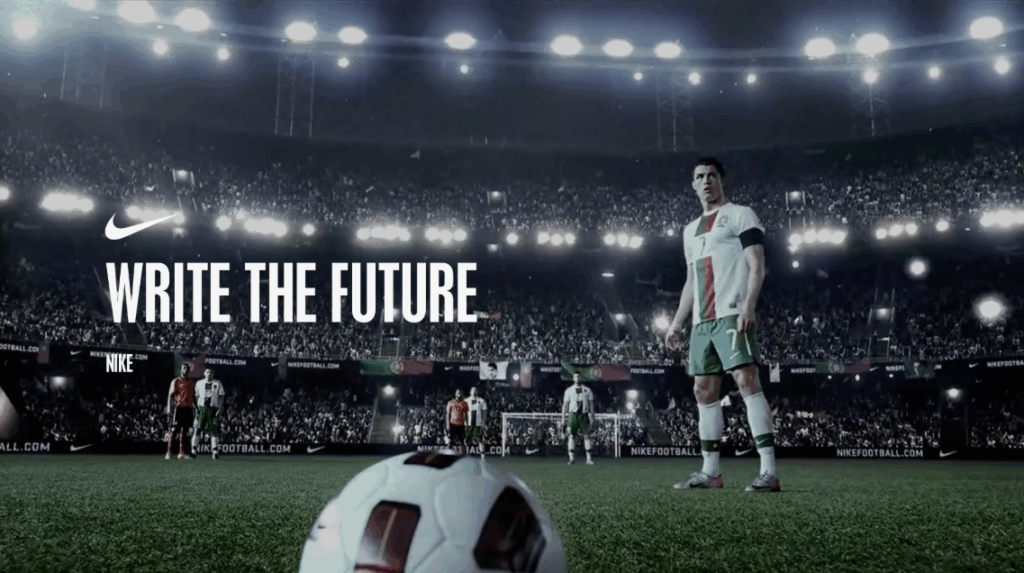
Nike, "Write the Future" (2010)
Nike never held official FIFA sponsorship rights for the 2010 World Cup, which makes "Write the Future" one of the most studied examples of ambush marketing in sports history. The film followed Cristiano Ronaldo, Wayne Rooney, Didier Drogba, Ronaldinho, and Fabio Cannavaro through an exaggerated, almost cinematic chain reaction: a single moment on the pitch rewriting an entire career, for better or worse.
The campaign worked because it wasn't really about Nike products at all. It was about pressure, legacy, and the idea that greatness can turn on one kick. That emotional hook is what made it spread organically rather than through paid placement.
What You Can Steal
You don't need official sponsorship to dominate a cultural moment, you need a concept strong enough that people want to share it without being asked. Build the story around stakes and consequence, not features.
Lay's — "The Ultimate Watch Party" (2026)
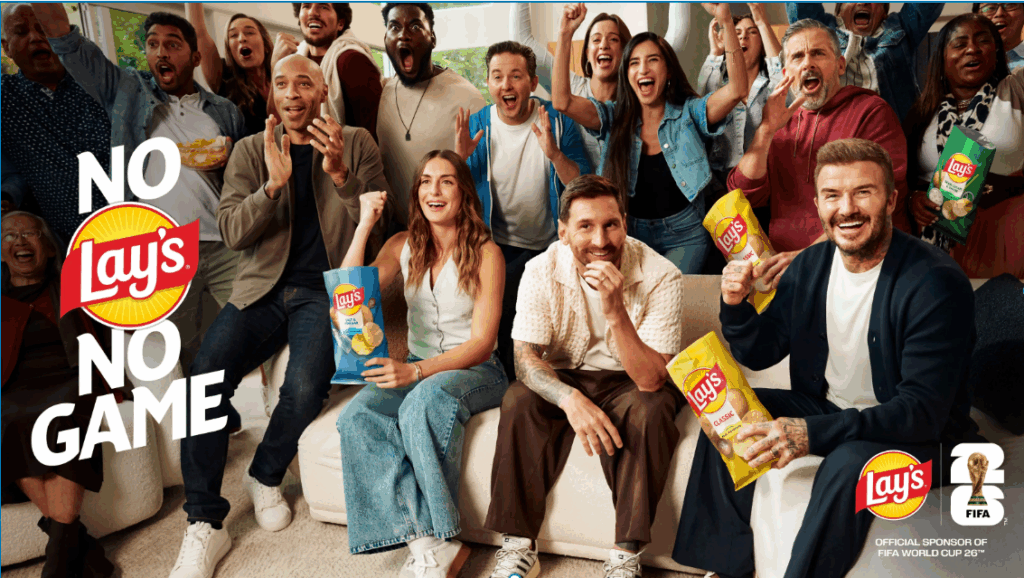
For the 2026 tournament, Lay's leaned fully into its long-running "No Lay's, No Game" platform with a campaign built around a chaotic, oversized watch party hosted by David Beckham, joined by Lionel Messi, Thierry Henry, Alexia Putellas, and comedic actor Steve Carell. The premise was simple: there aren't enough chips for the game, so the door policy becomes "no bag, no entry," and strangers start showing up with snacks in hand to get into the party.
What made it land wasn't the star-studded cast on its own, it was the relatable, almost UGC-style chaos of the premise. The football legends played second fiddle to an everyday scenario: scrambling to get snacks before kickoff.
What You Can Steal
A relatable, slightly chaotic everyday moment will often beat a polished, aspirational one. If your product naturally fits into a pre-match ritual, snacking, prepping, getting ready with friends, build the ad around that ritual, not around the product shot.
adidas — "Backyard Legends" (2026)
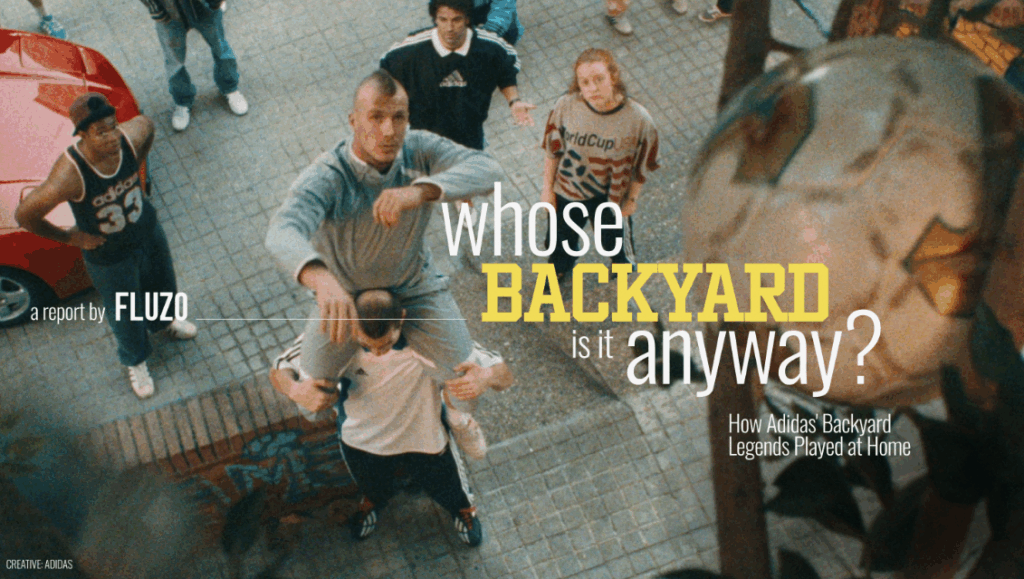
adidas went in the opposite direction with a five-minute, narrated short film tracing a mythical New York City street football team across different eras. Narrated by Timothée Chalamet and featuring Jude Bellingham, Trinity Rodman, Lamine Yamal, Messi, and Bad Bunny, the film plays less like a commercial and more like a streaming trailer, blending nostalgia with the raw, unstructured joy of pickup football.
The long runtime is notable. In an era of six-second skippable pre-rolls, adidas bet that a genuinely good story earns its length, and the response, viewers asking for a full feature film version, suggests the bet paid off.
What You Can Steal
Long-form content isn't dead if the story justifies the time. If you have a real narrative, not just a list of features, don't compress it into 15 seconds out of habit. Let the story breathe, then cut shorter versions from it for paid placements.
LEGO — "Everyone Wants a Piece" (2026)
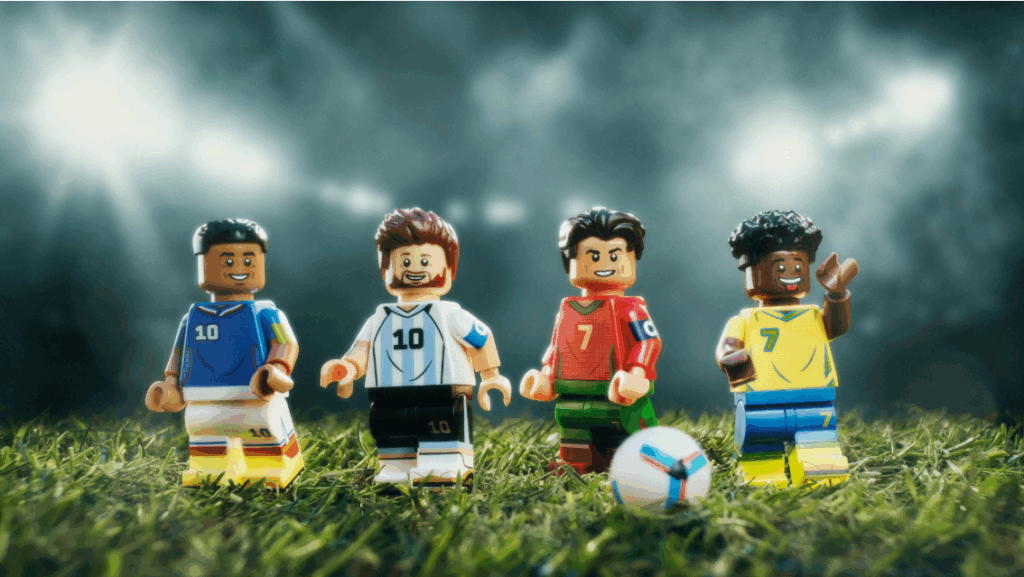
While most World Cup advertising chases scale, LEGO went the other way. "Everyone Wants a Piece" shows Messi, Cristiano Ronaldo, Kylian Mbappé, and Vinícius Júnior building a LEGO World Cup trophy brick by brick, each one trying to place his own minifigure on top. The twist: none of them win. A young fan walks in and places his own minifigure on the trophy instead.
The entire concept fits in a single sentence, which is exactly why it travels well. There's no five-act structure, no emotional monologue, just one clean idea, executed with LEGO's unmistakable visual identity.
What You Can Steal
A single strong idea, clearly executed, beats a complicated idea executed well. If you're working with limited production resources, simplicity is a strategy, not a compromise.
Coca-Cola — "Uncanned Emotions" (2026)
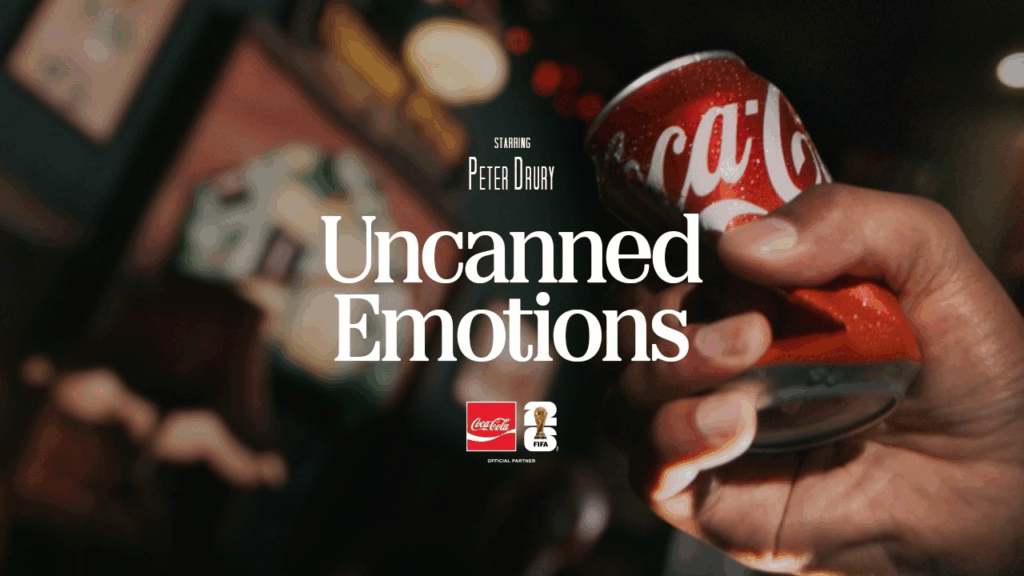
Coca-Cola skipped the player cameos entirely for 2026. "Uncanned Emotions" is a 90-second ride through the emotional rollercoaster of watching a match, the tension, the last-minute drama, the contested referee calls, narrated by veteran football commentator Peter Drury, who brings the same dramatic intensity he'd bring to an actual Cup final.
By making fans the main characters instead of players, Coca-Cola reinforced its long-standing positioning as the brand of the shared viewing experience rather than the brand of football itself.
What You Can Steal
You don't need access to athletes to make a football-relevant ad. Your customers' reactions, rituals, and emotions during the tournament are content in their own right, and often more relatable than another celebrity cameo.
Duracell — the Messi Battery Campaign (2026)
Duracell built its entire 2026 campaign around one joke: Messi's seemingly endless stamina and longevity can only be explained by one thing, he runs on Duracell batteries. The concept is delivered with humor and visual exaggeration rather than a complex script, which makes it instantly understandable in any language or market.
It's a textbook example of borrowing credibility from an athlete's reputation (in this case, longevity and consistency) and mapping it directly onto a product attribute, rather than forcing an unrelated celebrity into an unrelated story.
What You Can Steal
Find the one trait your product shares with the tournament's biggest storylines, stamina, precision, teamwork, comeback energy, and build a single, easily explainable visual metaphor around it.

Why Most Brands Can't Compete With Nike's Budget, and Don't Need To
Look back at those six takeaways and notice what's missing: none of them require a nine-figure media budget, an exclusive FIFA partnership, or a roster of professional athletes. What they require is a strong creative angle, a relatable human moment, and execution that doesn't feel like a sales pitch.
That's genuinely good news for e-commerce brands, agencies, and smaller marketing teams, because the part that used to be expensive, casting, filming, voiceover, editing, and producing multiple cuts for different platforms, is exactly the part that AI video tools have made fast and affordable. The creative thinking still has to come from you. The production bottleneck doesn't have to.
How to Make Your Own World Cup-Inspired Ad With AI
Here's a practical, repeatable process for turning any of the principles above into a finished ad, using your own product instead of a Champions League roster.
Step 1: Start With Your Product, Not a Script
Rather than starting from a blank page, paste your product page link into URL to Video Tool and let it pull your product images, key details, and benefits automatically. Starting from what you're actually selling keeps the creative grounded instead of drifting into a generic football montage that has nothing to do with your product.
Step 2: Pick a World Cup-Style Creative Angle
Match your product to one of the angles from the case studies above instead of trying to invent something from scratch:
- The watch-party ritual, if your product fits into a pre-match routine (snacks, drinks, home setup, comfort items)
- The fan reaction, if your product is something people use in a moment of excitement, stress, or celebration
- The underdog comeback, if your brand story involves overcoming odds or being the smaller player in your category
- The single visual metaphor, if one product attribute (speed, durability, precision) maps cleanly onto a football trait
Step 3: Choose a Voice and a Face for Your Story
Star power doesn't have to mean a contract with a national team captain. A natural-sounding AI avatar with a confident voiceover can carry the same emotional weight as a testimonial-style ad, especially when the script focuses on a relatable reaction rather than a scripted pitch. Keep the delivery conversational, the same research that explains why athlete cameos work in football ads also shows that stiff, over-rehearsed delivery hurts results far more than an unfamiliar face does.
Step 4: Add Match-Day Urgency Without the Legal Risk
Tournament timing creates real urgency, but it comes with real restrictions. Unless you hold official sponsorship rights, avoid the official tournament name, the FIFA logo and trophy imagery, national team names, and the likeness of real players. You can still capture the excitement through tone, color, pacing, and generic football imagery, countdown messaging, celebratory energy, and crowd excitement all work without crossing into protected territory. When in doubt, have your legal or compliance team review final creative before it goes live, since enforcement around major tournaments tends to be strict.
Step 5: Export for Every Channel Your Audience Uses
Different platforms reward different shapes and lengths. Generate a square or vertical cut for social feeds, a short-form version for stories and reels, and a slightly longer cut for platforms that support it. Using UGC Maker to produce several ratios and lengths from the same core script means you're not starting from zero for each platform, you're adapting one strong idea multiple ways, the same way every campaign above did across its own channels.
World Cup Ad Ideas by Category You Can Build This Week
Need a faster starting point? Here's how the five creative pillars translate across a few common e-commerce categories.
Sportswear and Fitness Brands
Lean into the underdog-comeback angle or the single visual metaphor. A product that supports recovery, endurance, or performance has a natural, honest connection to football's biggest storylines without needing to reference the tournament directly.
Food, Beverage, and Snacking Brands
The watch-party ritual is built for this category. Show the pre-match scramble, the shared bowl of snacks, the friend who always shows up empty-handed, the format that worked for Lay's works just as well at a smaller scale.
Home, Lifestyle, and Everyday Products
The fan-reaction angle tends to perform well here. A product that makes the viewing experience more comfortable, more social, or less stressful can be framed around the emotional highs and lows of watching a match, much like Coca-Cola's fan-first approach.
FAQ: World Cup Advertising in 2026
Can I use FIFA logos or player images in my ad?
Not unless you're an official tournament sponsor. FIFA actively protects its intellectual property, and that typically extends to the official tournament name, the trophy, team crests, and the likeness of professional players. This isn't legal advice, and trademark enforcement can vary by region and platform, so it's worth having a quick compliance check before your campaign goes live, but in general, brands without sponsorship rights build around the cultural moment rather than the official branding.
Do I need a big budget to make a World Cup-themed ad?
No. The campaigns that perform best combine a clear emotional angle with confident execution, not necessarily a large production budget. Several of the ideas covered above, a relatable ritual, a single visual metaphor, a fan-focused story, can be produced quickly with AI tools rather than a full production crew.
What actually makes a World Cup ad go viral?
Shareability usually comes down to a single quotable moment, a clear emotional hook, or a concept simple enough to explain in one sentence. Complexity rarely travels well on social platforms; a clean idea executed confidently almost always outperforms an elaborate one executed cautiously.
How fast can I create a World Cup-style ad with AI?
With a product link and a clear creative angle, a finished first draft can realistically be ready in minutes rather than the weeks a traditional production timeline would require. That speed matters during a tournament, since match-day relevance fades fast and being able to react to the moment is often more valuable than perfecting every frame.