



Every SEO team knows the theory by now: user-generated content builds trust, fills out long-tail keywords, and gives Google and AI search engines the kind of authentic, first-hand signal that branded copy can't fake. What almost nobody talks about is the part that actually breaks this strategy in practice, UGC doesn't show up on demand. You can't brief a customer the way you brief a copywriter, and waiting for organic reviews and videos to accumulate naturally is exactly that: waiting.
This guide covers why UGC has become a core ranking signal in 2026, how it actually moves the needle on visibility, and, critically, how AI video generation is closing the supply gap that has made UGC strategies slow and unpredictable for almost every team that has tried them.
Why UGC Has Become a Core SEO Signal in 2026
Google Is Ranking Conversations, Not Just Web Pages
Search results today look different from five years ago. Forum threads, Reddit discussions, and short-form video are showing up alongside, and sometimes above, traditional web pages, particularly for queries where the searcher is looking for an opinion or a real-world experience rather than a definition. Google has been explicit about this shift: Liz Reid, the executive who leads Google Search, has publicly described adjusting ranking systems specifically to surface more forum and short-video content because user behavior changed, especially among younger searchers who turn to TikTok or Instagram before they turn to a search box at all.
This isn't a temporary trend. It's a direct response to the "Experience" pillar that Google added to its E-E-A-T framework, a formal acknowledgment that content demonstrating lived, first-hand experience deserves a different kind of weight than content that simply explains a topic well.

AI Search Engines Treat UGC as Trust Fuel
The shift goes further once AI-powered search enters the picture. Tools built on retrieval-augmented generation pull from a wide pool of external sources to construct their answers, and conversational, first-person UGC is exactly the kind of material that pattern fits. Independent analyses of citation patterns across AI engines consistently find that user-generated platforms, forums, video platforms, and review sites, rank among the most frequently cited sources, often ahead of traditional brand or publisher pages for the same query.
The practical implication is that breadth of authentic content now matters as much as authority in the traditional backlink sense. AI systems are looking for distributed, real-world signal that your product is genuinely being discussed and used. A single polished landing page doesn't produce that signal. Dozens of authentic-feeling video testimonials, reviews, and demonstrations scattered across your product pages do.

The Authenticity Constraint, Why Fake UGC Backfires
None of this works if the underlying signal isn't credible, and that's the part that's easy to skip past. Industry analysts who study AI-driven discovery have been direct about this: incentivizing UGC for a product or service that doesn't actually deliver accelerates reputational damage rather than visibility. The same logic applies to manufactured UGC that reads as manufactured. If a "customer testimonial" sounds scripted, looks identical to every other testimonial on a competitor's site, or makes claims that don't hold up, it doesn't just fail to help, it actively erodes the trust signal the whole strategy depends on.
This is the central tension any UGC SEO strategy has to resolve: you need volume and speed, but the content has to feel genuinely human, specific, and tied to a real use case, not generic.
How UGC Actually Moves the Needle on Rankings
Long-Tail Keyword Coverage You Can't Manually Write
A content team writing in its own voice will always gravitate toward the same handful of phrasings. Real users don't. Someone searching for how a product handles a specific, narrow use case, "best resistance bands for rotator cuff recovery" rather than "best resistance bands", uses language a brand team would rarely think to target directly. UGC naturally surfaces this kind of phrasing because it reflects how actual buyers describe their actual problems, and search engines reward that specificity because it matches how people search.
Engagement Signals That Compound Over Time
Pages with embedded video and visual UGC consistently hold attention longer than pages with static product copy alone, and longer time-on-page combined with lower bounce rates is a pattern search engines have learned to associate with content that actually answers the query. This isn't a one-time lift, it compounds. Every new piece of UGC added to a page is another reason for a visitor to stay, another data point reinforcing relevance, and another asset that can be repurposed across product pages, category pages, and paid social.
User-Generated Backlinks and Citations
When someone genuinely uses and likes a product, they reference it, in a blog post, a forum answer, a roundup article. Those references are backlinks and citations a brand could never manufacture at scale through outreach alone, and they tend to look exactly like the kind of natural, contextual link that search engines trust most. The more authentic UGC exists in the wild, the more of these organic references accumulate over time.
The Bottleneck No One Talks About: UGC Supply Is Slow and Unscalable
Here's where the theory runs into reality. The standard playbook for generating UGC looks like this: offer a discount in exchange for a review, run a contest, hire UGC creators from freelance marketplaces, or simply wait for organic mentions to accumulate. Each of these works, eventually, but each has a real constraint.
Incentivized reviews take weeks to accumulate in meaningful volume. Contests generate a short burst of content tied to a single campaign window, then go quiet. Hiring individual UGC creators is faster than waiting, but it's neither cheap nor instant, a single video can run anywhere from roughly fifty to several hundred dollars depending on complexity and usage rights, and sourcing, briefing, and approving creators takes real operational time, multiplied across every product, every angle, and every language a brand needs to cover.
For a catalog of even a few dozen SKUs, each needing UGC-style coverage across multiple use cases and search intents, the math doesn't work. This is the actual reason most UGC SEO strategies stall: not a lack of understanding, but a lack of supply that can keep pace with how many pages and queries actually need coverage.

How AI Video Closes the UGC Supply Gap
Generating Authentic-Feeling UGC at Scale
This is where AI video generation changes the equation. Instead of waiting on customers or commissioning creators one video at a time, a brand can generate dozens of UGC-style videos, natural-sounding voiceover, human-feeling avatars, realistic product handling, directly from a product listing, in the time it used to take to brief a single creator.
The key word is "UGC-style," not "fake." The goal isn't to impersonate a specific real customer; it's to produce the same format and tone that organic UGC takes, a person talking directly to camera about a real use case, so that product pages have the visual and conversational density that both shoppers and AI engines respond to, without waiting for that content to arrive organically.

Matching AI UGC to Real Search Intent (Not Just Volume)
Volume alone isn't the goal, and treating it as one is how this strategy goes wrong. Every piece of AI-generated UGC should map to an actual search intent: a specific use case, objection, or comparison that real customers are searching for. If keyword research shows people searching "is [product] good for sensitive skin" or "[product] vs [competitor] for beginners," that's the script angle worth producing, not a generic, unfocused testimonial that could apply to any product in the category.
This is where pairing keyword research with production matters more than raw output. A tool built specifically to generate UGC-style video and image ads, like an UGC Maker that can take a product and a specific script angle and turn it into a finished, natural-feeling video, lets a team produce content mapped directly to a keyword list rather than producing first and hoping it's relevant later.
Keeping AI-Generated UGC Within Google's Quality Guidelines
Scaling content production always raises a fair question: does this risk looking like the kind of mass-produced, low-value content search engines have spent the last several algorithm updates trying to filter out? The honest answer is that it can, if it's treated as a shortcut rather than a production method.
The distinguishing factor isn't whether AI was involved in production, it's whether the resulting content is genuinely useful, specific, and non-duplicative. AI-generated UGC that addresses a real, distinct use case and reads as natural, specific, and helpful sits in a completely different category from templated filler that exists purely to pad a page. Teams that treat AI video as a way to produce more authentic-feeling, intent-matched content, rather than more content, full stop, stay well inside the spirit of what search engines are actually rewarding.
A Practical Framework for AI-Powered UGC SEO
Step 1 — Audit Where Your Product Pages Are Missing Authentic Signals
Start with the pages already getting impressions but underperforming on click-through rate or conversion. These are usually pages with strong technical SEO and weak experiential signal, clean copy, no visible proof that real people use and like the product. This is your priority list, not your full catalog.
Step 2 — Generate AI UGC Video Mapped to Specific Long-Tail Queries
For each priority page, pull the actual long-tail queries and "people also ask" questions tied to it, and generate video content that speaks directly to those questions rather than restating the product description. A tool like UGC Maker can pull the existing images and details, and turn a specific angle, a use case, an objection, a comparison, into a finished UGC-style video without starting from a blank script.
Step 3 — Publish, Embed, and Structure for Indexing
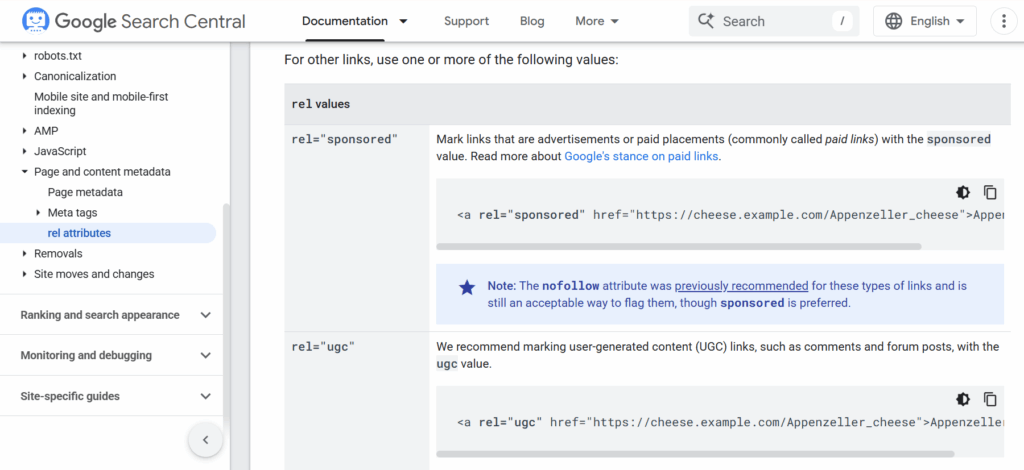
Embed the video directly on the relevant product or landing page rather than only on social platforms, and accompany it with a transcript or caption so the content is crawlable as text, not just video. Apply review or video structured data markup where it genuinely applies, and make sure any user-submitted links within UGC sections use the rel="ugc" attribute so search engines correctly read the relationship.
Step 4 — Layer in Real Customer UGC Over Time
AI-generated UGC should fill gaps and create early momentum, not replace genuine customer content indefinitely. As real reviews, photos, and videos start arriving, surface them prominently alongside or in place of the AI-generated material. The healthiest long-term mix uses AI video to solve the cold-start problem and maintain coverage across a large catalog, while real customer content increasingly carries the weight as it accumulates, which keeps the authenticity signal genuine rather than permanently synthetic.
Common Mistakes That Undermine UGC SEO
A strategy this dependent on perceived authenticity has a few specific ways it can go wrong.
Treating AI UGC as a Volume Play Instead of an Intent Match
Generating fifty generic videos is far less valuable than generating ten that each answer a specific, real query. Volume without intent mapping wastes production capacity and risks looking templated.
Skipping Moderation and Disclosure
Whether UGC is sourced from real customers or generated with AI, unmoderated content can drift off-brand, off-topic, or factually wrong fast. A clear content policy and a review step before publishing protects both rankings and reputation.
Ignoring the Technical Layer
Video and image UGC that isn't accompanied by text, alt content, and proper markup is invisible to crawlers no matter how good it looks to a human visitor. The technical implementation is not optional; it's the difference between UGC that helps rankings and UGC that's purely a conversion asset.
Never Transitioning to Real Customer Content
AI-generated UGC that never gets supplemented by genuine customer reviews and videos eventually reads as static and synthetic, even if it didn't start that way. The goal is momentum and coverage early on, with real signal taking over as it becomes available.
FAQ: UGC SEO and AI Video in 2026
Does Google penalize AI-generated UGC?
Google doesn't penalize content for being AI-assisted; it penalizes content that's low-quality, unhelpful, or created purely to manipulate rankings. AI-generated UGC that's specific, intent-matched, and genuinely useful to a visitor is treated the same as any other helpful content. The risk comes from using AI to mass-produce generic, duplicate, or misleading material, not from the production method itself.
How much UGC video do I need to see SEO results?
There's no fixed number, but the more useful benchmark is coverage, not volume: every priority page should have video content addressing its top three to five real search intents, whether that's a use case, a comparison, or a common objection. A handful of well-targeted videos on a high-traffic page will outperform dozens of generic ones spread thin.
Can AI-generated UGC replace real customer reviews?
Not entirely, and it shouldn't try to. AI-generated UGC is most valuable for solving the cold-start problem on new products or underperforming pages where authentic content doesn't exist yet. Real customer reviews and videos carry a different kind of weight precisely because they're verifiably from actual buyers, so the strongest long-term strategy blends both rather than relying on AI content indefinitely.
What's the fastest way to start scaling UGC for SEO?
Start with the priority pages identified in the audit step, pick the highest-intent queries for each, and generate matching video content directly from your existing product listings rather than building scripts from scratch. Platforms designed specifically for this, generating UGC-style video and image ads straight from a product link, cut the time between identifying a content gap and having a finished, publishable asset from weeks down to minutes.
Turning UGC Into a Compounding SEO Asset
UGC isn't a passing SEO trend; it's becoming the connective tissue between traditional search, social discovery, and AI-generated answers. The brands that win this shift won't be the ones that understand the theory best, most SEO teams already do. They'll be the ones that solve the supply problem first, using AI video to fill the authenticity gap fast enough to compound, while building the systems to layer in real customer content as it arrives.